
Devotional commentary · October 1
The Place of Exaltation
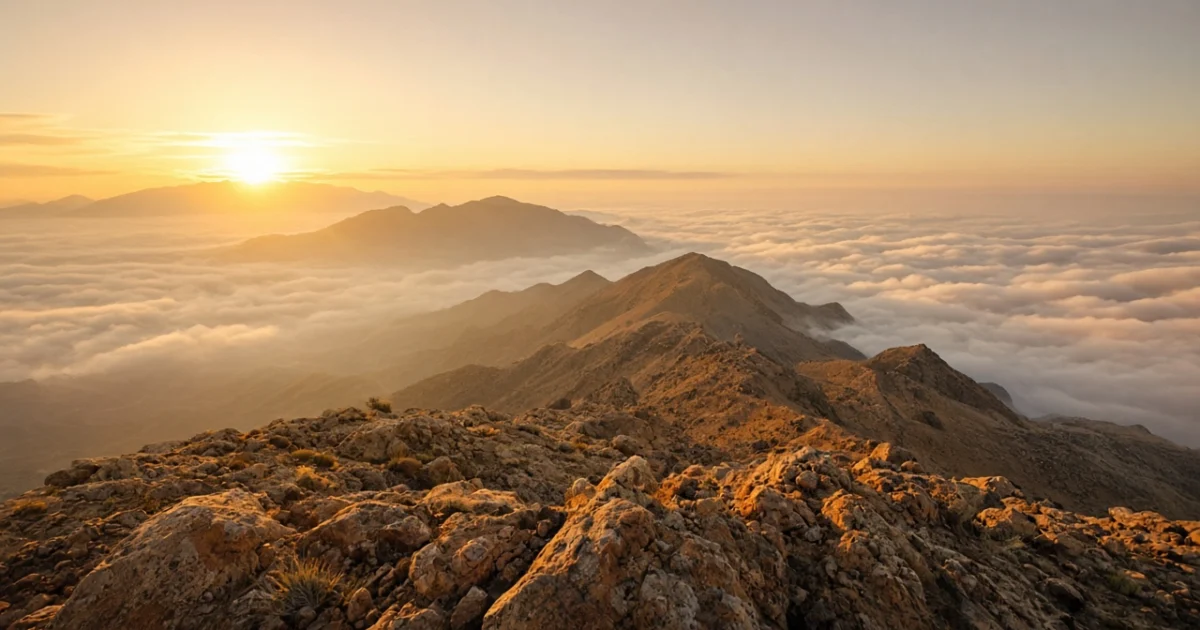
After six days Jesus took Peter, James, and John and led them up a high mountain by themselves to be alone. He was transfigured in front of them, and his clothes became dazzling—extremely white as no launderer on earth could whiten them.
Mark 9:2-3 CSB
Start hereThe Big Idea
Jesus took three disciples up a high mountain where they saw His glory. Chambers says mountaintop moments with God are real and meaningful, but we are not meant to live there. The true test of our spiritual life is whether we can come back down into the valley, where people need help and ordinary life must be lived. The mountain is not given to teach us lessons but to shape our character.
Follow the readingEight Points
Tap a point to open it. Quotes are Chambers’ own words; ¶ marks his paragraph.
Chambers says we have all had times of exaltation on the mountain, when we saw things from God’s perspective and wanted to stay.
Maybe it was a retreat, a worship service, or a quiet morning when God felt near. Chambers does not dismiss those moments. They are gifts. He simply wants us to understand what they are for, so we do not cling to them in the wrong way.
“But God will never allow us to stay there.”
Peter wanted to build shelters and remain on the mountain. Chambers says God always leads us back down. The mountaintop is a place to visit, not a place to settle. That can feel like loss, but it is part of God’s purpose.
The true test of our spiritual life, Chambers says, is the power to come down from the mountain. If we can only go up, something is wrong. We go up so we can later go down and lift the troubled people in the valley.
Right after the transfiguration, the disciples met a desperate father and a suffering boy. Chambers sees that as the point. Spiritual experiences are meant to equip us to serve, not to separate us from people who are hurting.
“We are made for the valley and the ordinary things of life”
Chambers says mountains and sunrises are moments of inspiration, but our calling is in the everyday. Kitchens, offices, classrooms, and hospital rooms are where faith proves its stamina. God is glorified there as truly as on any summit.
Chambers warns that our spiritual selfishness always wants more mountaintop moments. We imagine we could live like angels if only we could stay up there. Those times have real meaning, he says, but we must not let selfishness make them the only times that count.
It is possible to chase spiritual highs the way others chase entertainment. Chambers calls that selfishness. Treasuring the mountain is good, but demanding to stay there turns a gift into an idol.
We tend to think everything that happens should be turned into useful teaching, Chambers says. In fact, it is meant to become something better than teaching, which is character.
We often walk away from experiences asking what we learned. Chambers says God is after something deeper. He wants to make us into people who reflect Him, not just people who know more about Him.
“The mountaintop is not meant to teach us anything, it is meant to make us something.”
This may be the most memorable line in the reading. God does not give us glory merely to inform us. He gives it to form us, so we carry its effect into the valley.
“We can never measure spiritual matters in that way.”
Chambers warns against always asking what the use of an experience is. God’s purposes cannot be measured by immediate usefulness. Mountaintop moments are rare, and they are meant for something in His purpose, even when we cannot name it.
Two ways to live itThe Simple Takeaway
Picture two friends who return home from the same powerful church retreat.
An everyday example: Picture a man who felt God’s nearness during an early-morning prayer walk. Later that day he sits with a grieving coworker on a break, listening patiently. The quiet of the morning has become compassion in the afternoon.
ReflectOne Question to Sit With
What recent mountaintop moment is God asking you to carry down into an ordinary day?
Excerpts from My Utmost for His Highest by Oswald Chambers, Updated Edition, © 1992 by Oswald Chambers Publications Association, Ltd., are quoted for commentary; read the full devotional at utmost.org. This is independent analysis and commentary, not affiliated with or endorsed by Our Daily Bread Ministries. Key verse: CSB.