
Devotional commentary · September 30
The Assigning of the Call
Now I rejoice in my sufferings for you, and I am completing in my flesh what is lacking in Christ’s afflictions for his body, that is, the church.
Colossians 1:24 CSB
Start hereThe Big Idea
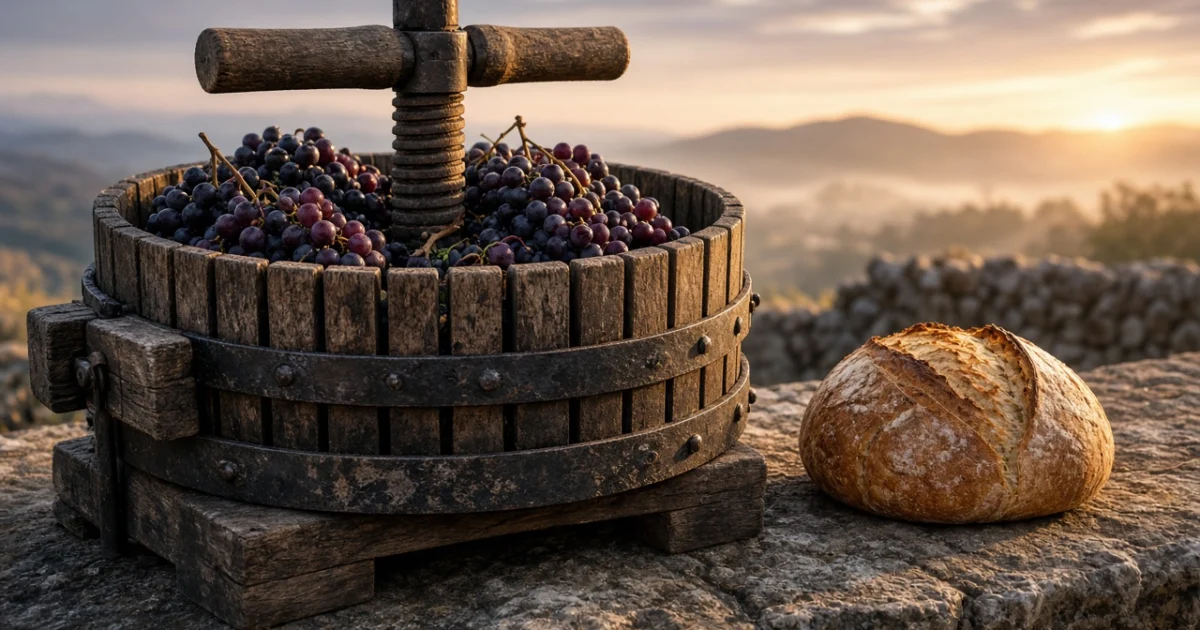
Paul rejoiced in suffering for the sake of the church. Chambers says God’s call is not about our personal holiness but about being made broken bread and poured-out wine for others. Grapes become wine only when they are crushed, and God chooses the fingers that do the squeezing. Our part is to stay right with Him and let Him work, so that what He produces nourishes His other children.
Follow the readingEight Points
Tap a point to open it. Quotes are Chambers’ own words; ¶ marks his paragraph.
Chambers says we try to turn our own spiritual consecration into God’s call, but when we get right with Him, He sets that aside. He then gives us a deep, gripping pain that fixes our attention on a call we never imagined, and for one bright moment we see His purpose and say, “Here am I! Send me.”
We like to design our own service to God. Chambers says God often brushes those plans aside. The call He gives may come through pain, and it may surprise us. Yet when we glimpse His purpose, we find ourselves gladly saying yes.
“This call has nothing to do with personal sanctification, but with being made broken bread and poured-out wine.”
Bread is broken to be eaten, and wine is poured out to be drunk. Chambers says that is what God’s call does with us. It is not about our spiritual polish. It is about becoming nourishment for others.
Chambers observes that God cannot make us into wine if we object to the fingers He chooses to crush us. We would accept it if God used His own hand in some special way, but we resist when He uses someone we dislike or circumstances we vowed never to accept.
This is painfully honest. We are willing to suffer nobly, but not through that coworker or that situation. Chambers says those very fingers may be God’s tools. Resisting them can keep us from becoming what He intends.
“Yet we must never try to choose the place of our own martyrdom.”
Chambers says we do not get to pick how we are broken. Surrender includes letting God decide the place and the means. That is hard, but it frees us from endlessly negotiating with Him.
If we are ever to become wine, Chambers says, we must be crushed. No one drinks grapes, and grapes become wine only when they are squeezed.
Chambers uses a simple picture from the vineyard. The crushing is not a sign that God has abandoned us. It is the necessary step in becoming something that can bless others.
“I wonder what finger and thumb God has been using to squeeze you?”
Chambers turns the teaching toward each reader. Think about the person or situation that presses on you most. Could that be the very place where God is shaping you into wine for others?
Chambers says that if God had squeezed us before we were ripe, the wine would have been bitter. Holiness means our natural lives experience God’s presence as they are providentially broken in His service, and we must be placed into God and brought into agreement with Him first.
God knows when we are ready. If we have escaped some pressing so far, it may be that we were not ripe. His timing protects the quality of what He is making, so the result is sweet rather than bitter.
“Stay right with God and let Him do as He likes”
Chambers ends with simple counsel. Stay right with God and let Him work. He promises that God is producing bread and wine that will benefit His other children. Our brokenness is never wasted.
Two ways to live itThe Simple Takeaway
Picture two church volunteers who both serve in a demanding food pantry ministry.
An everyday example: Picture a young mother whose sleepless nights with a sick child press her harder than she ever expected. She prays, stays close to God, and later finds she can comfort other worn-out parents with real understanding.
ReflectOne Question to Sit With
Who or what is pressing you right now, and how might God be using it to make you a blessing?
Excerpts from My Utmost for His Highest by Oswald Chambers, Updated Edition, © 1992 by Oswald Chambers Publications Association, Ltd., are quoted for commentary; read the full devotional at utmost.org. This is independent analysis and commentary, not affiliated with or endorsed by Our Daily Bread Ministries. Key verse: CSB.