
Devotional commentary · July 15
My Life’s Spiritual Honor and Duty
I am obligated both to Greeks and barbarians, both to the wise and the foolish.
Romans 1:14 CSB
Start hereThe Big Idea
Chambers sees Paul as a man gripped by his debt to Christ, a debt he could only repay by spending himself for others.
Follow the readingEight Points
Tap a point to open it. Quotes are Chambers’ own words; ¶ marks his paragraph.
Chambers says Paul was overwhelmed by how much he owed Jesus Christ, and he spent his whole life expressing it.
Chambers points to Paul not as an unusually gifted evangelist but as someone who understood the structure of the Christian life clearly: everything received through Christ creates a debt. Paul could not contain that debt within himself—it had to be expressed outward, and it shaped the entire direction of his life.
“The greatest inspiration in Paul’s life was his view of Jesus Christ as his spiritual creditor.”
Chambers makes an important distinction: the debt to Christ is not experienced as a burden of guilt but as a source of inspiration. Paul was not driven by obligation and fear—he was energized by love for the One to whom he owed everything and by the privilege of spending that debt in service to others.
He asks whether we feel that same debt toward every unsaved person.
Chambers makes the indebtedness concrete: it is not a general sense of owing God but a specific sense of obligation to every person who has not yet received what we have received. Each unsaved soul is someone to whom we carry a debt, because what we have was given for them as much as for us.
“Every tiny bit of my life that has value I owe to the redemption of Jesus Christ.”
This is a comprehensive audit of our spiritual assets: every gift, every grace, every quality, every capacity that has any genuine worth—all of it traces back to the redemption of Christ. Nothing good that we offer the world originated with us. This recognition is the basis of genuine humility and genuine generosity.
“I am not a superior person among other people”
One of the most common distortions in Christian life is using spiritual privilege to justify a posture of superiority over those who have not received it. Chambers reverses this entirely: privilege creates obligation, not elevation. The more we have received, the more we owe in service.
Paul sold himself to Christ, Chambers says, and counted himself a debtor to everyone on earth.
Paul’s indebtedness was not selective—it did not apply only to people he found easy to love or who were likely to respond well. He owed the gospel to ‘everyone on the face of the earth’—the cultured Greek and the uncivilized barbarian, the receptive and the hostile, the near and the far.
“Quit praying about yourself”
Chambers offers a bracing redirection: so much of our prayer life can be consumed by our own needs, our own spiritual development, our own problems. Paul’s model suggests that genuine spiritual maturity shifts the center of gravity from self to others—not abandoning self-care but refusing to make self the permanent focus.
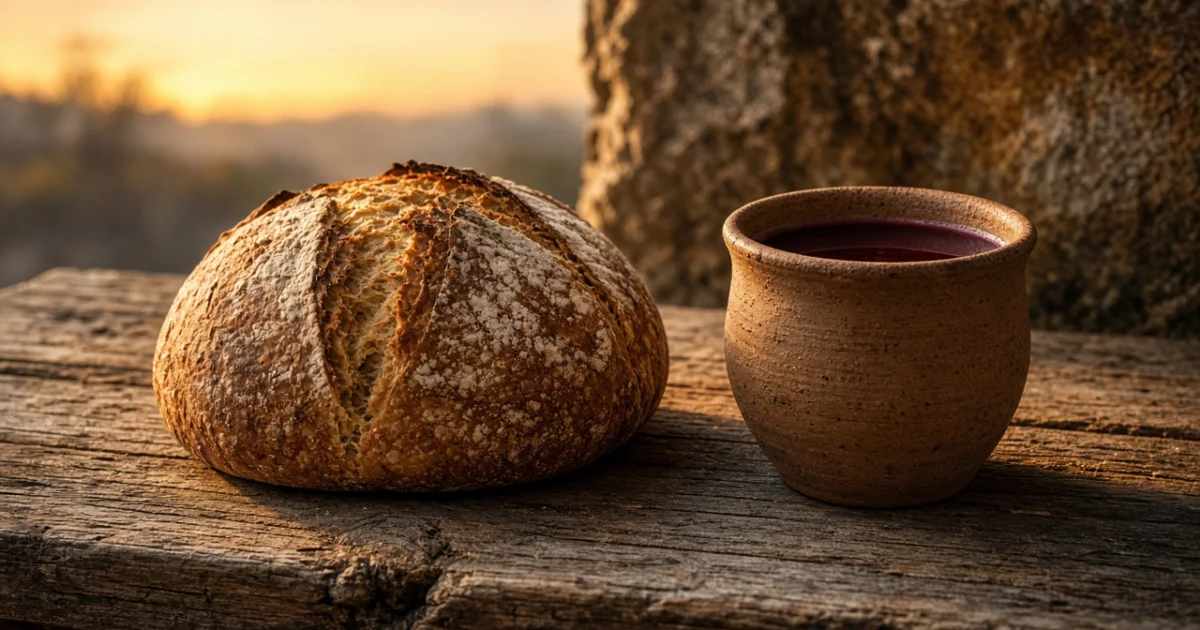
Spending our lives for others as bondservants of Jesus, Chambers says, is what it really means to be broken bread and poured-out wine.
Chambers connects the Eucharistic images—broken bread, poured wine—to the actual shape of the Christian life. Just as Jesus’ body was broken and His blood poured out for others, the life of His bondservant is meant to be spent—given, used, poured out—in service to those to whom the debt is owed.
Two ways to live itThe Simple Takeaway
Two Christians are thinking about what they owe to the people around them who do not yet know Christ.
An everyday example: Picture a retired mechanic who remembers how a neighbor patiently shared Christ with him thirty years ago. He starts fixing single moms’ cars in his driveway for free, and while he works he listens, prays and, when the door opens, tells them why.
ReflectOne Question to Sit With
If you genuinely believed that everything of value in your life was owed to Christ’s redemption, how would that change your sense of obligation to the people in your daily world who do not yet know Him?
Excerpts from My Utmost for His Highest by Oswald Chambers, Updated Edition, © 1992 by Oswald Chambers Publications Association, Ltd., are quoted for commentary; read the full devotional at utmost.org. This is independent analysis and commentary, not affiliated with or endorsed by Our Daily Bread Ministries. Key verse: CSB.