
Devotional commentary · October 16
The Key to the Master’s Orders
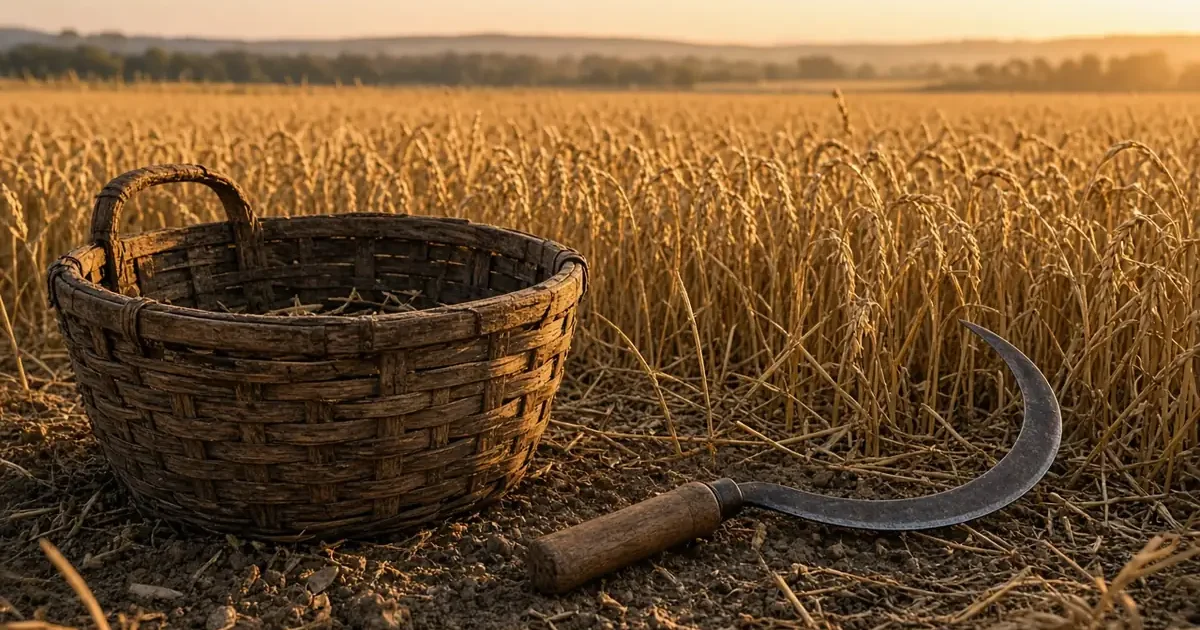
Therefore, pray to the Lord of the harvest to send out workers into his harvest.
Matthew 9:38 CSB
Start hereThe Big Idea
Chambers says the key to God’s difficult work in the world is not activity, skill, or strategy but prayer, because that is what the Master ordered. Prayer looks foolish to common sense, yet it puts the harvest back in the hands of its Owner and frees us from imagined special callings so we can belong to Jesus Himself.
Follow the readingEight Points
Tap a point to open it. Quotes are Chambers’ own words; ¶ marks his paragraph.
“The key is in following the Master’s orders”
Chambers grounds prayer in obedience. Jesus did not suggest that His followers pray for workers; He told them to. That changes how we see prayer. It is not a warm-up before the real work or a fallback when plans fail. It is the work the Master assigned.
Chambers says the key is not work as the word is commonly used today, which often pulls our focus away from God. Nor is it common sense, medicine, civilization, education, or even evangelization.
Chambers lists things that are genuinely valuable, including evangelization itself. He is not dismissing them. He is saying none of them is the key. When any good method becomes our main hope, our attention quietly moves from God to the method, and the work becomes ours instead of His.
“In the natural realm, prayer is not practical but absurd.”
Chambers is honest about how prayer appears. From a purely practical standpoint, asking an unseen Lord to send workers seems like a poor use of time when there is so much to do. He invites us to accept that it is foolish by common sense and wise by God’s order.
“From Jesus Christ’s perspective, there are no nations, but only the world.”
Chambers widens our view. We tend to sort people by nation, group, and familiarity. Jesus sees one world that He loves and one harvest that belongs to Him. Prayer shaped by His view will not stop at the borders of our own interests.
In our words: Chambers asks how many of us pray with regard to only one Person, Jesus Christ, rather than to the people involved. He says the harvest belongs to Christ, and it is produced through distress and through conviction of sin.
This reframes both prayer and the people we pray for. The harvest is not our project or our results. It is Christ’s, and it often ripens in hard places: through distress and the painful awareness of sin.
Chambers warns that we can stay busy at work while people all around us are ripe and ready, wasting our Lord’s time in over-energized activities and programs. He asks whether, if a crisis came into the life of a father or brother, we would be there as a laborer to reap for Jesus Christ.
This is a sobering picture. It is possible to be extremely active in religious work and still miss the person in front of us at the moment God has prepared. Chambers brings the harvest close to home, into our own families, where our excuses are easiest to make.
“No Christian has a special work to do.”
Chambers anticipates the reply, “But I have a special work to do!” He refuses it. A Christian belongs to Jesus Christ as a servant who is not greater than his master, and does not dictate to Christ what he intends to do.
“He calls us to Himself.”
Chambers ends with the heart of it. Our Lord does not call us first to a task; He calls us to Himself. When we pray to the Lord of the harvest, Chambers says, He will engineer our circumstances to send us out as His laborers. Our part is to belong to Him and pray. His part is to place us.
Two ways to live itThe Simple Takeaway
Picture two believers who both want to see people come to know Christ.
An everyday example: Picture a man rushing out the door to lead a church outreach event when his adult brother calls, upset after losing his job. His first instinct is to promise to call back later. Instead he sits down, listens, and prays with his brother on the phone, realizing that this conversation may be the harvest he has been praying about.
ReflectOne Question to Sit With
Where might the busyness of your work for God be keeping you from the people He has placed right in front of you?
Excerpts from My Utmost for His Highest by Oswald Chambers, Updated Edition, © 1992 by Oswald Chambers Publications Association, Ltd., are quoted for commentary; read the full devotional at utmost.org. This is independent analysis and commentary, not affiliated with or endorsed by Our Daily Bread Ministries. Key verse: CSB.