
Devotional commentary · October 31
The Trial of Faith
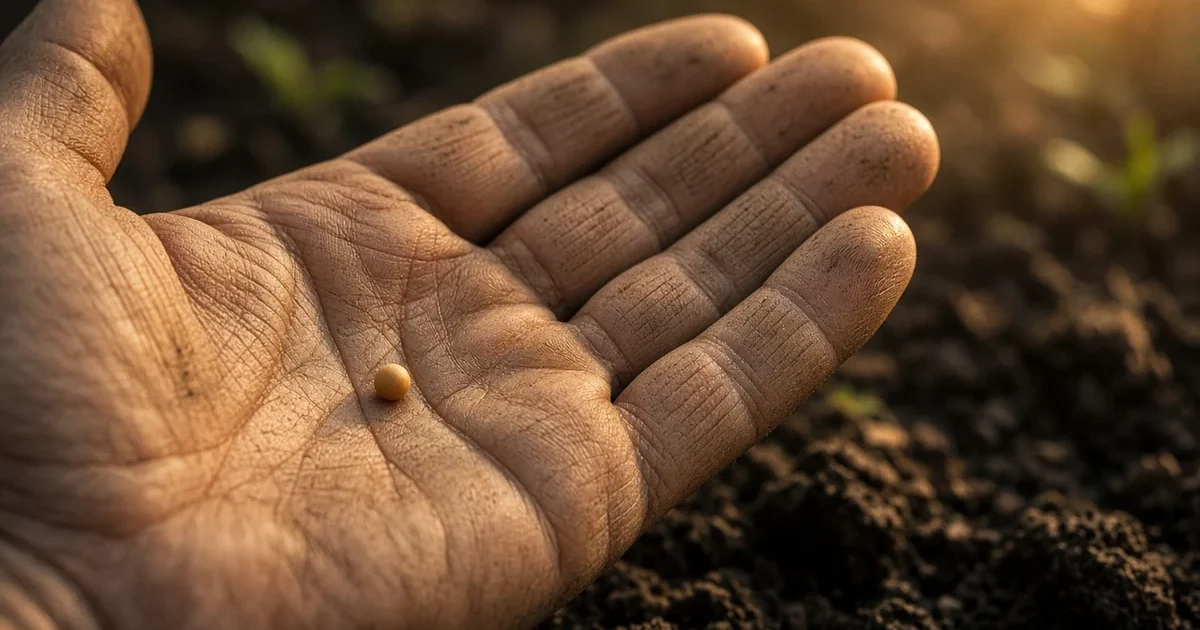
“Because of your little faith,” he told them. “For truly I tell you, if you have faith the size of a mustard seed, you will tell this mountain, ‘Move from here to there,’ and it will move. Nothing will be impossible for you.”
Matthew 17:20 CSB
Start hereThe Big Idea
Chambers says faith does not earn rewards; it brings us into right relationship with God and gives Him room to work. God may withdraw the felt blessings of our early faith so we learn to walk by faith, and the real trial is whether His character proves trustworthy to us whatever He does.
Follow the readingEight Points
Tap a point to open it. Quotes are Chambers’ own words; ¶ marks his paragraph.
Chambers notes that we tend to think God rewards us for our faith, and that this may be so in the early stages.
Many of us begin the Christian life with a simple exchange in mind: I trust, and God blesses. Chambers acknowledges that early on it can seem to work that way. But he is about to show that faith is not a transaction, and that God has something deeper in view.
“faith brings us into the right relationship with God and gives Him His opportunity to work”
Chambers says we earn nothing through faith. Faith is not a coin we spend to purchase blessings. It places us in the right relationship with God, and then He is free to act as He chooses. The focus shifts from what we receive to the God we trust.
Chambers says God often has to knock the bottom out of our experience to bring us into direct contact with Himself, because He wants us to understand that this is a life of faith, not of emotional enjoyment of His blessings. Our early faith was narrow and intense, mixed with emotion, and full of light and sweetness.
The first days of faith are often warm and bright. When God allows them to fade, it can feel like loss. Chambers sees it as God drawing us past our experiences of Him to Himself.
“Then God withdrew His conscious blessings to teach you to “walk by faith””
Paul’s phrase from 2 Corinthians 5:7 describes a steady, step-by-step trust. God removes some of the felt supports so that our trust can stand on Him rather than on our sensations.
Chambers says we are worth much more to God now than we were in our days of conscious delight and thrilling testimony.
This is an encouraging word for anyone whose faith feels quieter than it used to. The absence of excitement is not the absence of growth. A seasoned, steady faith that trusts God without emotional rewards is precious to Him, even when it does not feel dramatic to us.
“God’s character must be proven as trustworthy in our own minds”
Chambers says faith by its nature must be tested, and that the real trial is not simply that trusting God is hard. The deeper question is whether we will come to see, settled in our own minds, that God is trustworthy. He also notes that faith being worked out into reality goes through times of isolation.
“Never confuse the trial of faith with the ordinary discipline of life”
Chambers adds a wise caution. Much of what we call a trial of faith, he says, is simply the result of being alive. Discerning the difference keeps us from over-spiritualizing every difficulty while still taking real trials of faith seriously.
Chambers says biblical faith is faith in God standing against everything that contradicts Him, a faith that says, “I will remain true to God’s character whatever He may do.” He calls Job’s words the greatest expression of faith in the Bible: “Though He slay me, yet will I trust Him” (Job 13:15).
Job’s words show faith at its most mature. It no longer depends on understanding or on comfortable outcomes. It rests on who God is. Jesus’ promise about mustard-seed faith in our key verse points the same way: even small faith is powerful when it is placed in God Himself.
Two ways to live itThe Simple Takeaway
Picture two believers whose faith has grown quiet after years of following Jesus.
An everyday example: Picture a man who prays for months for a job after a layoff, and nothing opens. He feels none of the spiritual warmth he once knew. Still, each morning he reads a psalm, thanks God for one thing, and tells Him, “I will trust You whatever You do.”
ReflectOne Question to Sit With
If God removed the feelings you associate with His blessing, what would your trust in Him rest on?
Excerpts from My Utmost for His Highest by Oswald Chambers, Updated Edition, © 1992 by Oswald Chambers Publications Association, Ltd., are quoted for commentary; read the full devotional at utmost.org. This is independent analysis and commentary, not affiliated with or endorsed by Our Daily Bread Ministries. Key verse: CSB.